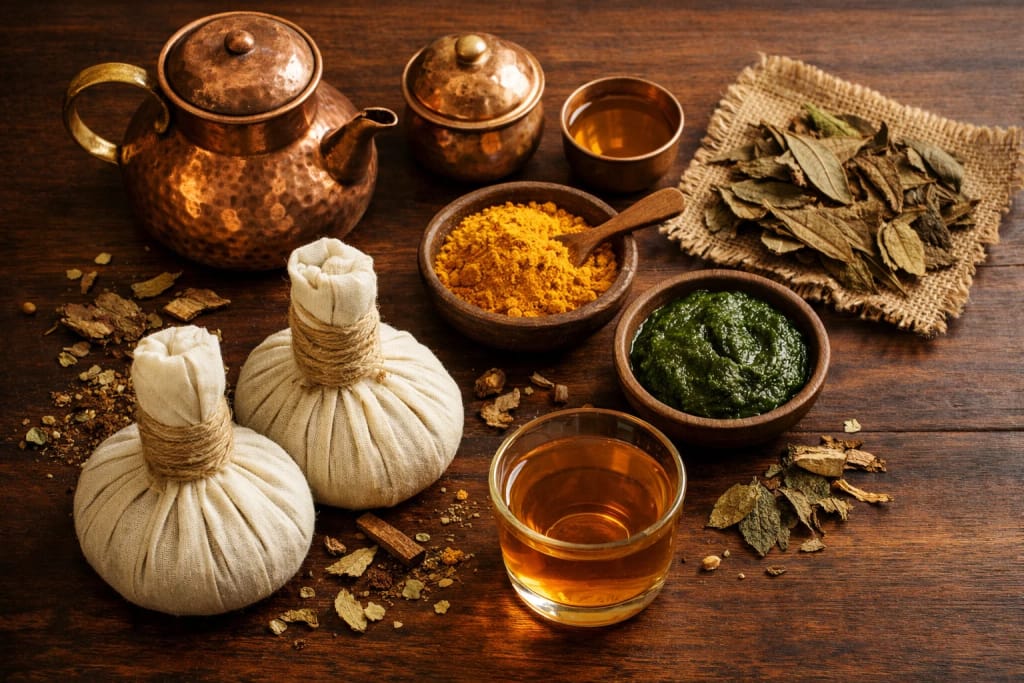
Detox gets thrown around a lot these days, usually on a juice bottle. Ayurveda has its own version for the womb, and it’s far older. It’s called Garbhashaya Shuddhi.
On its infertility page, SNA Ayurveda Hospital in Thrissur lists it as the second step of care, straight after balancing the Doshas. The reason they give is simple. A healthy womb matters for implantation and for carrying a pregnancy.
What actually happens
Two Panchakarma therapies are named. Virechana is a detox treatment, and Basti is a medicated enema. The idea is to clear Ama, the toxins Ayurveda says can build up in reproductive tissue. The clinic expects a healthier uterine environment and better fertility potential from it. Expects, not guarantees, because every body reacts in its own way.
One piece of a larger plan
Ayurveda doesn’t treat the womb in isolation. It looks at four things together: ovulation timing (Ritu), womb health (Kshetra), nourishment and hormones (Ambu), and egg and sperm quality (Beeja). Womb cleansing handles only Kshetra, so the clinic adds Dosha balancing, ovarian support and, in suitable cases, Uttar Basti.
It’s never the first step
Your first visit is a conversation. The doctors ask about your history, then assess your Dosha and Prakriti. After that they look for the root cause and plan treatment around you, and follow-ups let them change course if needed. Dr. Salini P., MS (Ayu), Ph.D, is the listed doctor for infertility and gynaecology, and the hospital has been treating patients since 1920.
Things to do before you book
Ask whether Panchakarma suits your reports and how many sessions you may need. Take your scans and test results along. If another doctor is treating you, tell the vaidya. And please don’t stop any prescribed medicine without asking that doctor first.
You’ll find every therapy they offer on their page about Ayurvedic infertility treatment in Kerala.