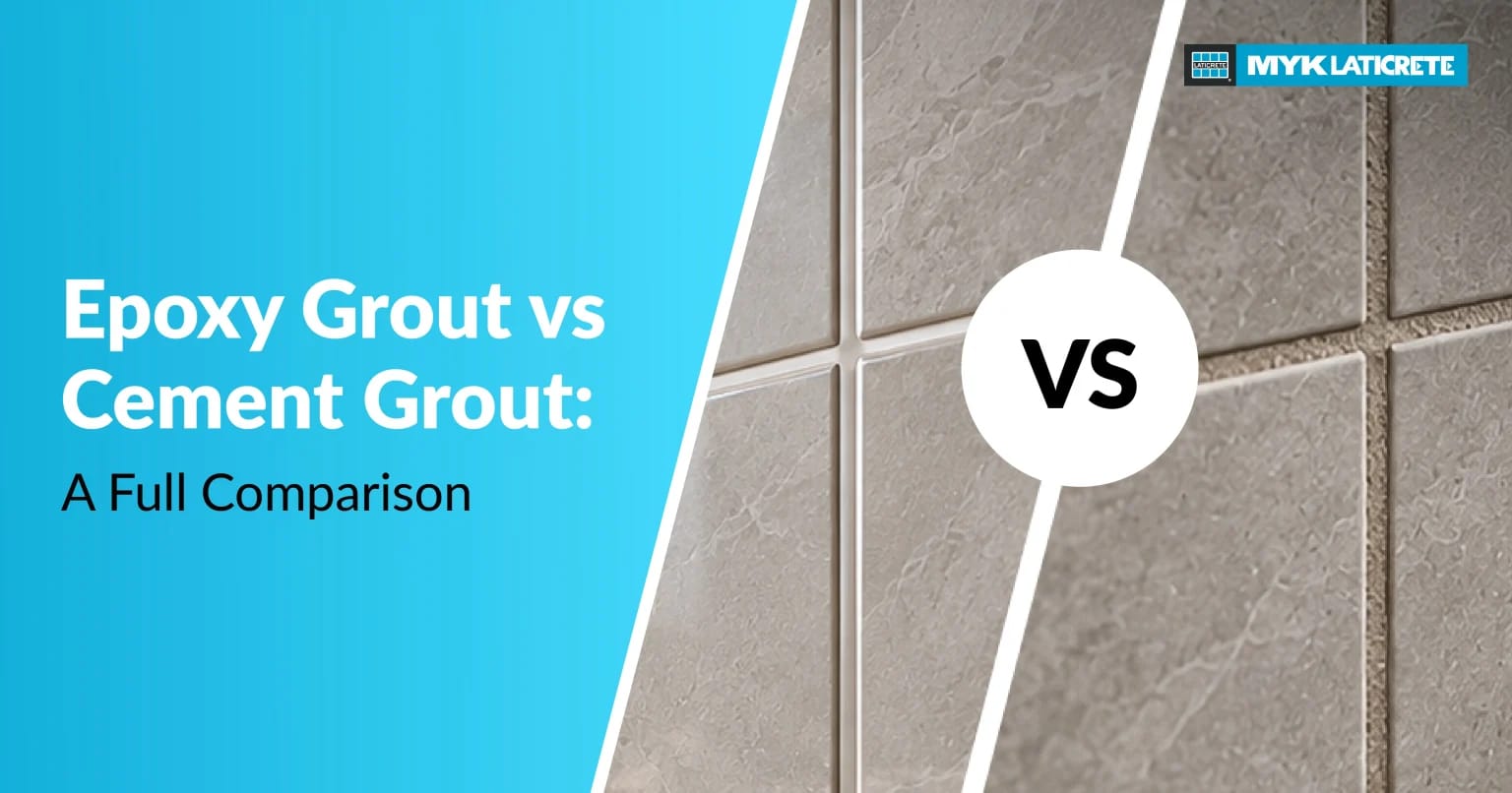
Choosing the right grout is just as important as selecting the right tiles for a successful tiling project. When comparing epoxy grout vs cement grout, it is essential to understand how each option performs in terms of durability, stain resistance, moisture exposure, maintenance, and cost. The right choice depends on where the tiles are installed and the performance you expect from the finished surface. Understanding these differences can help homeowners, contractors, architects, and builders make informed decisions for long-lasting tile installations.
What Is Cement Grout?
Cement grout is a commonly used tile-joint filling material made primarily from cement, fillers, and performance-enhancing additives. It is widely used in residential and commercial projects because of its affordability, ease of application, and availability in different colours.
Cement grout is suitable for many wall and floor applications, including living rooms, bedrooms, and other general-purpose tiled areas. However, its porosity can make it more susceptible to moisture absorption and staining, depending on the formulation and maintenance routine. Choosing the right product and following the manufacturer's installation instructions can help maintain the appearance and performance of cementitious grout joints.
What Is Epoxy Grout?
Epoxy grout is a resin-based grouting material generally formulated using epoxy resin, a hardener, and fillers. Once cured, it forms a dense, durable joint that offers excellent resistance to stains, moisture, and many chemicals, depending on the product formulation.
Because of these properties, epoxy grout is often preferred for kitchens, bathrooms, commercial spaces, and other areas where hygiene, cleanliness, and resistance to everyday spills are important. MYK LATICRETE offers epoxy grouting solutions, including SP-100™ DUO, designed to provide stain, germ, and water resistance for suitable tile and stone installations.
Epoxy Grout vs Cement Grout: Key Differences
Both grout types serve the same basic purpose of filling joints between tiles, but their composition and performance characteristics differ.
Comparison factorEpoxy groutCement groutCompositionResin-based formulationCement-based formulationStain resistanceGenerally excellentDepends on formulation and maintenanceMoisture resistanceHigh for suitable applicationsVaries by product formulationDurabilityForms dense, durable grout jointsPerforms well when correctly selected and installedMaintenanceGenerally easier to maintain in stain-prone areasMay require more attention to staining and joint conditionApplicationRequires careful mixing, application, and timely cleaningGenerally simpler to mix and applyInitial costUsually higherUsually lowerCommon applicationsKitchens, bathrooms, commercial and hygiene-sensitive areasResidential and general-purpose wall and floor installations
The actual performance of either grout depends on the selected product, tile type, joint dimensions, installation quality, and exposure conditions.
Which Grout Is Better for Kitchens and Bathrooms?
Kitchens and bathrooms are regularly exposed to moisture, spills, oils, soap residue, and cleaning products. For these environments, epoxy grout is often a preferred choice because of its stain resistance, low porosity, and ease of maintenance.
For suitable installations, MYK LATICRETE SP-100™ DUO is an option to consider when resistance to stains, germs, and water is a priority. Its suitability should be confirmed against the project's specific requirements and the manufacturer's technical recommendations.
Cement grout can also be suitable for many kitchen and bathroom applications when the correct formulation is selected and the product is installed and maintained properly.
It is important to remember that grout alone does not replace a dedicated waterproofing system where waterproofing is necessary.
Cost and Long-Term Maintenance
Cement grout generally has a lower initial material cost, making it an economical option for projects with standard performance requirements. It is often suitable for residential installations where exposure to staining and demanding cleaning conditions is limited.
Epoxy grout typically costs more initially, but its resistance to stains and moisture can make maintenance easier in high-use areas. Over time, these advantages may help reduce the effort required to maintain clean-looking grout joints.
When comparing costs, consider more than the purchase price. Installation requirements, expected service conditions, cleaning needs, and long-term maintenance should all influence the final decision.
How to Choose the Right Grout for Your Project
Before selecting a grout, consider the following factors:
Installation area: Identify whether the tiles will be installed in a kitchen, bathroom, living room, commercial facility, or another environment.
Moisture and stain exposure: Epoxy grout is often advantageous in areas exposed to frequent spills, moisture, and intensive cleaning.
Budget: Cement grout generally offers a more economical initial option, while epoxy grout may provide additional performance benefits in demanding environments.
Tile compatibility: Check that the grout is suitable for the tile or stone type, joint width, and intended application.
Installation requirements: Follow the manufacturer's instructions for preparation, mixing, application, cleaning, curing, and maintenance.
MYK LATICRETE provides grouting solutions for different tiling requirements. Explore the MYK LATICRETE epoxy grout range to compare available products and identify an option suitable for your project.
Frequently Asked Questions
1. What is the main difference between epoxy grout and cement grout?
The main difference is their composition and performance. Epoxy grout is resin-based and generally provides excellent stain and moisture resistance, whereas cement grout is cement-based, usually more economical, and often simpler to apply.
2. Is epoxy grout better than cement grout for bathrooms?
Epoxy grout is often preferred in bathrooms because it resists stains and moisture and is generally easier to maintain. However, the best choice depends on the installation conditions and the manufacturer's recommendations.
3. Is epoxy grout more expensive than cement grout?
Yes, epoxy grout generally has a higher initial material cost. Its durability and stain resistance may make it a worthwhile investment in areas that require frequent cleaning or experience regular spills.
4. Does epoxy grout require sealing?
Many epoxy grouts do not require a separate grout sealer. However, requirements can vary by product. Always consult the relevant technical data sheet, particularly when installing grout alongside natural stone or other sensitive materials.
5. Can cement grout be used for both wall and floor tiles?
Yes. Suitable cementitious grouts are available for many wall and floor applications. Select a formulation appropriate for the tile material, joint width, exposure conditions, and intended use.
6. Which MYK LATICRETE product should I consider for epoxy grouting?
MYK LATICRETE SP-100™ DUO is an epoxy grout designed for suitable tile and stone installations, offering stain, germ, and water resistance. Review the SP-100™ DUO product page and its technical data sheet to determine whether it meets your project requirements.
Conclusion
Choosing between epoxy grout and cement grout depends on your budget, installation environment, and long-term maintenance expectations. Cement grout is a practical and economical solution for many standard tiling projects, while epoxy grout is often better suited to areas where stain resistance, moisture resistance, and ease of cleaning are priorities.
By understanding the differences and selecting a grout designed for the intended application, you can improve the appearance, durability, and maintenance of tiled surfaces. Explore MYK LATICRETE's grouting solutions to find the right product for your next tiling project.