Diwali is next Sunday. The mithai boxes are already arriving, and so is the advice: "Just go for a walk after eating, it cancels it out." Half of that is right. A short walk soon after a meal really does blunt the rise in blood sugar, and the evidence for it is decent. What it does not do is cancel anything. Let's look at what the studies found, how long and how soon to walk, and how to get through the week without either guilt or a sugar crash.
What the research says about walking after meals
The best summary is a 2023 meta-analysis in Sports Medicine by Engeroff, Groneberg and Wilke, "After Dinner Rest a While, After Supper Walk a Mile?". It pooled eight randomised crossover trials with 116 people, some with type 2 diabetes and some without.
The findings:
Exercise after a meal lowered the post-meal blood sugar rise compared with no exercise.
Exercise after a meal beat exercise before it.
Exercise before a meal did not blunt the post-meal rise at all.
The sooner after the meal, the bigger the effect. Duration, type and intensity did not change the result much.
In the authors' words, exercise "has a greater acute beneficial impact on postprandial hyperglycemia when undertaken as soon as possible after a meal".
Now the honest caveat. Eight small trials, mostly crossover designs, with a high overall risk of bias. Good enough to act on, because walking is cheap and safe. Not good enough to promise miracles.
An Indian trial worth knowing
A 2017 study at PGIMER Chandigarh, published in Diabetology & Metabolic Syndrome, compared two routines in adults with type 2 diabetes:
A 15-minute brisk walk starting 15 minutes after each meal.
One 45-minute brisk walk before breakfast.
Same total walking time. Over 60 days, HbA1c fell by 0.7 percentage points with the post-meal walks and rose by 0.3 with the single morning walk. Median post-lunch glucose in the post-meal phase dropped from 10.9 to 7.9 mmol/L.
The limitations are real: no washout between the two phases, carbohydrates were not counted, and glucose was self-monitored. But the message is simple and practical. When you walk matters, not just how much.
What a walk cannot do
A walk helps your body handle the sugar from a meal. It does not erase the meal.
A fact-check by The Week in April put it well. It found that post-meal walks help glucose control, but there is no evidence the habit on its own prevents diabetes. Diabetologist Dr Rajiv Kovil told them: "Walking alone is not enough."
The sugar itself still counts. The WHO recommends keeping free sugars, those added to food plus honey, syrups and fruit juice, below 10% of daily energy, and says going below 5%, about 25 grams or six teaspoons a day, brings extra benefits. A couple of sweets and a sweetened drink can add up quickly in a festival week. A walk does not change that arithmetic.
A Diwali-week plan that works in real life
Walk soon, walk short
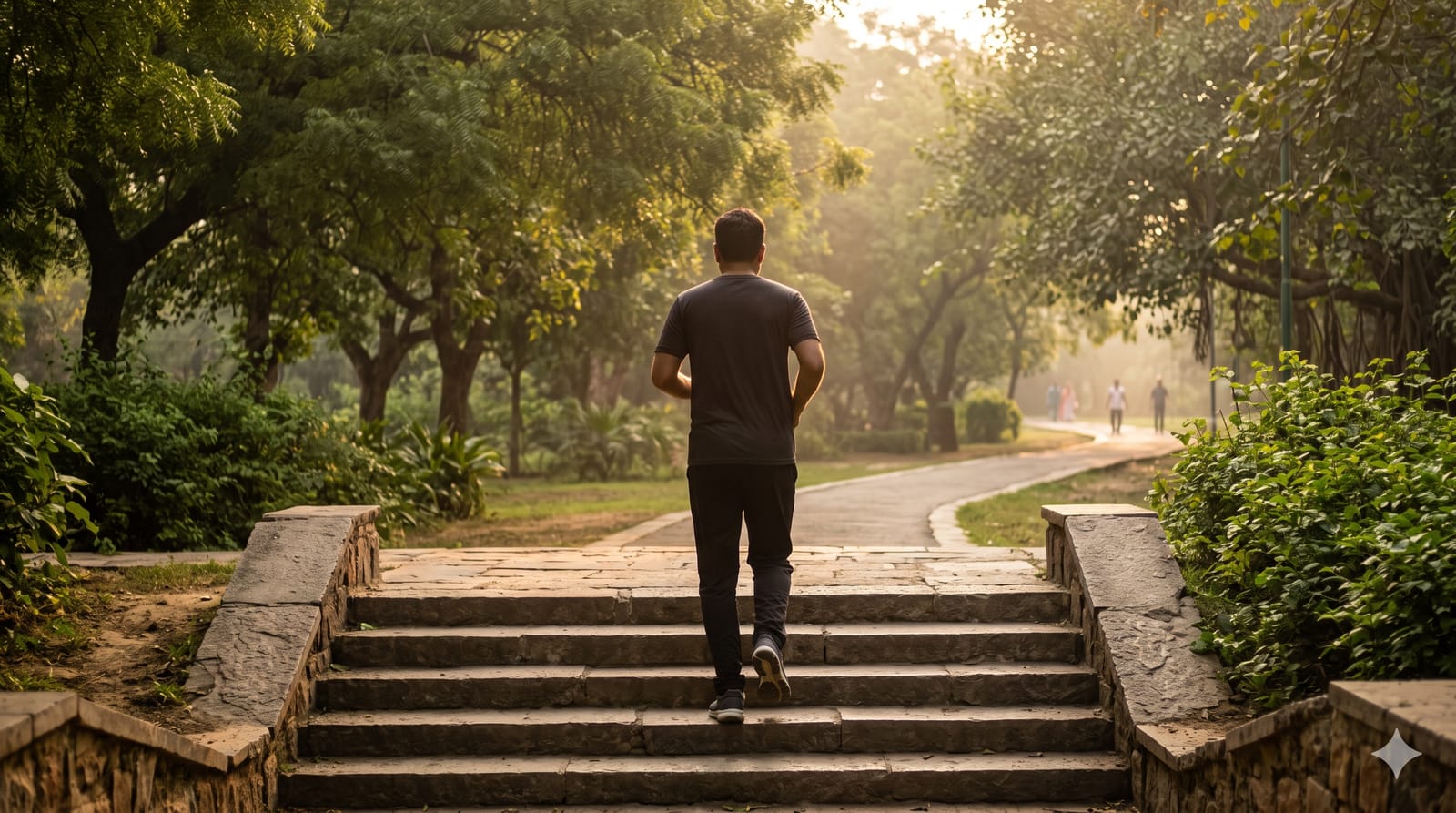
Ten to fifteen minutes, starting soon after you finish lunch or dinner. The PGIMER walks began 15 minutes after each meal, and the meta-analysis found that the sooner the activity started, the bigger the effect. You do not need to power-walk; a steady pace you can keep up is enough to start.
Make it social
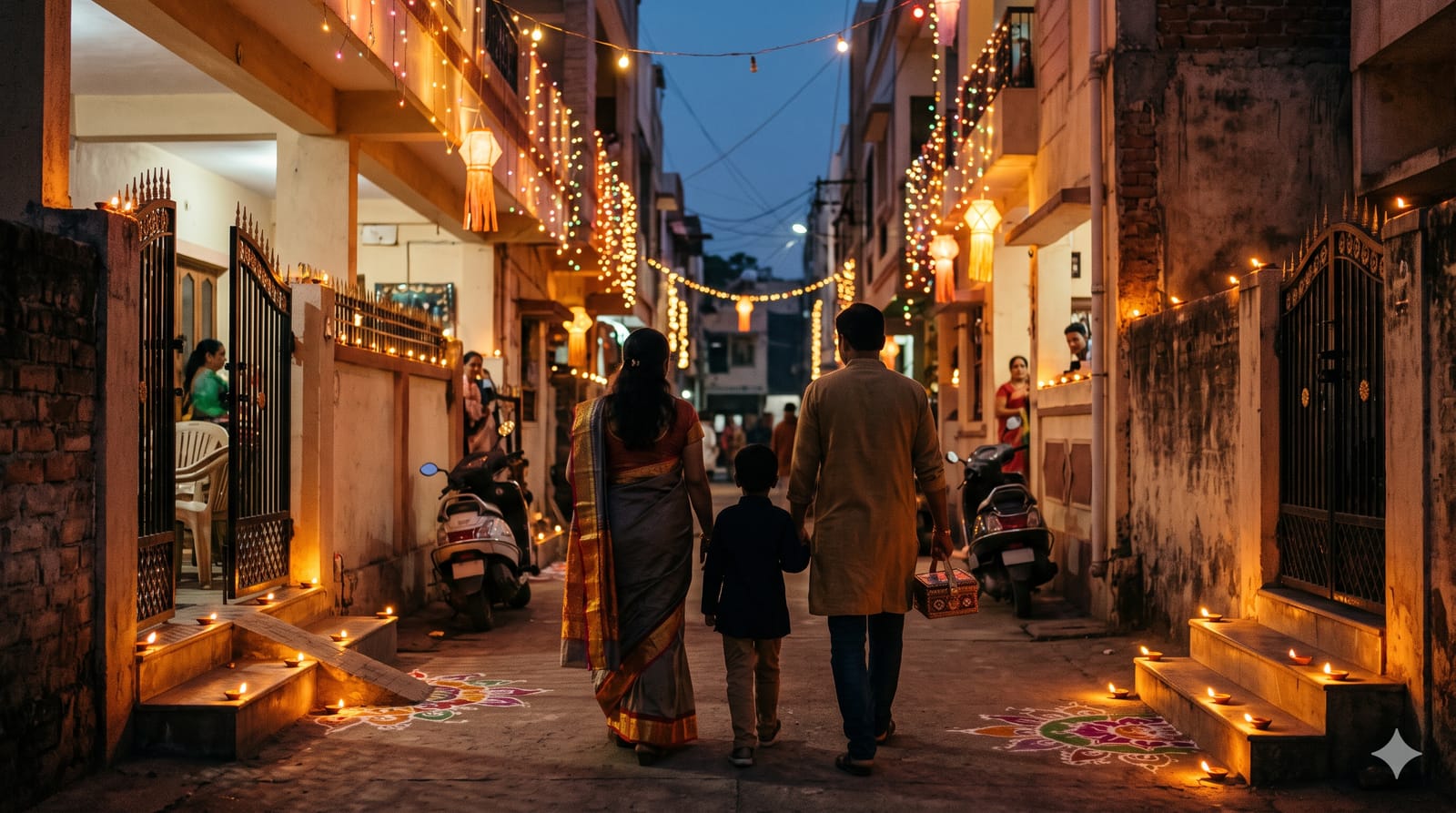
Diwali evenings are perfect for this. Walk the lane to see the lights. Walk to a neighbour's house instead of driving. Take the kids out to show them the diyas. Nobody needs to know it is a "glucose walk".
Choose your sweets, do not graze
Pick the one or two you truly love, rather than tasting everything in every box.
Have them with a meal, then walk, instead of nibbling all afternoon.
Cut a piece in half and share it with someone.
Do not forget drinks. Sweetened lassi, sharbat and juice are free sugars too.
Keep the rest of the plate sensible
Fill up on the regular food: dal, sabzi, paneer, curd, roti. Festival meals are not the time to skip protein and vegetables to "save room".
Keep one strength session
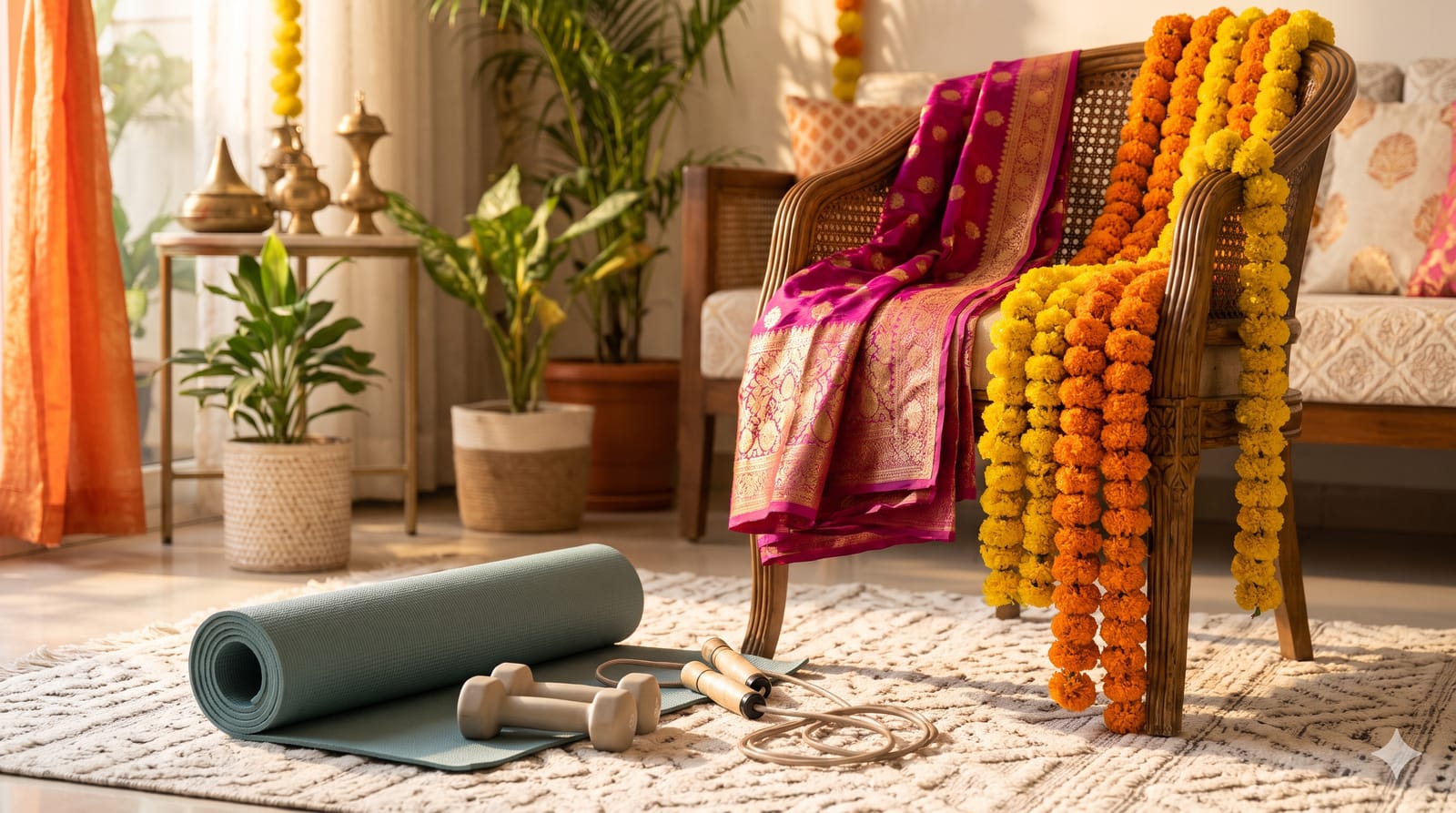
Even in a festival week, try to fit in one 20-minute strength session at home. Squats to a chair, counter push-ups, backpack rows. It keeps the habit alive for after Diwali.
What a sensible Diwali day can look like
Morning: a normal breakfast with some protein, such as eggs, besan chilla or curd. Do not "save up" for later by skipping it.
Lunch: the festive meal, sweets included if you like, then a 15-minute walk.
Afternoon visits: say yes to one sweet per house, and no to the second box.
Dinner: lighter, then the family walk to see the lights.
Nothing on that list is heroic. That is the point. A plan you will follow on a festival day beats a perfect plan you abandon by noon.
If you have diabetes or take glucose-lowering medicine
Post-meal walking is generally safe, and the PGIMER trial reported no low-sugar episodes. But if you take insulin or tablets that can cause low blood sugar, talk to your doctor before changing your routine, and carry something sweet on your walk just in case.
This is general information, not medical advice. Check with your doctor if you have a medical condition.
The honest summary: a short walk after the big meals is one of the easiest wins of the week. Take it. Just do not mistake it for a licence to eat the whole box.