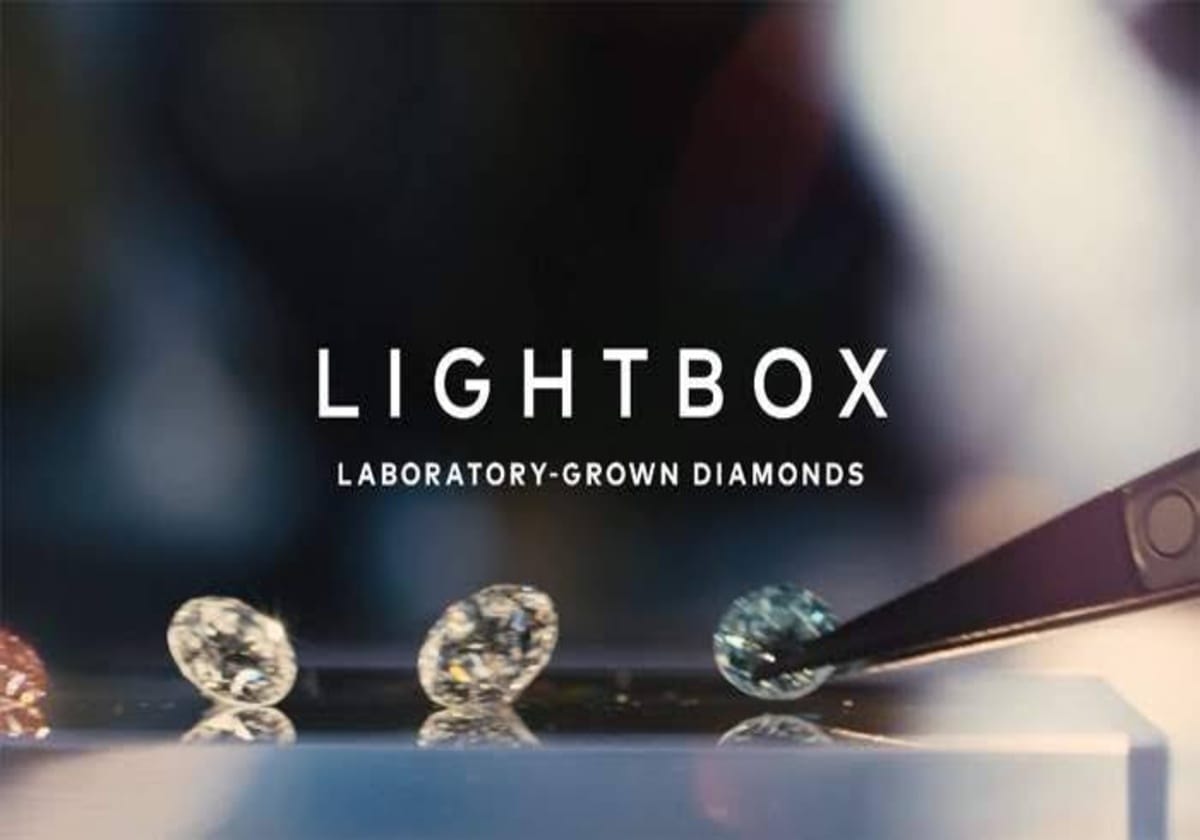
The diamond industry has been changing as lab-grown diamonds become more affordable and consumer choices continue to evolve. One notable development came in May 2025, when De Beers Group announced its intention to discontinue Lightbox, its lab-grown diamond jewellery brand, and refocus investment on natural diamonds.
The decision offers an interesting look at how a long-established diamond company is responding to changing market conditions. It also raises a broader question: what makes natural diamonds a distinct category in a market where consumers have more options than ever?
Why Did De Beers Decide to Wind Down Lightbox?
De Beers launched Lightbox in 2018 to sell lab-grown diamond jewellery at transparent, fixed prices. At the time, the brand offered a different approach to a market where lab-grown diamonds were often priced in relation to natural stones.
However, the economics of the sector changed significantly over the following years. Advances in production technology, growing manufacturing capacity and stronger price competition contributed to falling prices for lab-grown diamonds.
In its May 2025 announcement, De Beers reported that wholesale prices for lab-grown diamonds used in jewellery had fallen by around 90% since Lightbox launched. The company said this decline was a major reason for its decision to discontinue the business.
The move was also part of a wider effort to simplify operations and concentrate investment on areas the company considered more strategically valuable.
What Does De Beers Lab Mean in This Context?
The term De Beers Lab is sometimes used informally when discussing the company's involvement in laboratory-grown diamonds. The more precise reference is Lightbox, the jewellery brand De Beers introduced in 2018.
Lightbox sold diamonds created in laboratories rather than mined from the Earth. These stones have essentially the same chemical composition and crystal structure as natural diamonds, although their origins differ.
The decision to move away from lab-grown diamond jewellery does not mean the company has abandoned synthetic diamond technology altogether. Its subsidiary, Element Six, continues to focus on synthetic diamonds for industrial and technological applications, including areas such as semiconductors and quantum technologies.
This distinction is important because diamond technology has uses beyond jewellery, and the commercial priorities for industrial materials can differ considerably from those of consumer products.
Why is De Beers Refocusing on natural diamonds?
For them, natural diamonds remain central to its jewellery strategy. Formed through geological processes over extremely long periods, natural diamonds have a distinct origin and a long-established place in jewellery, personal milestones and luxury markets.
The company announced that winding down Lightbox would allow it to redirect investment towards initiatives intended to strengthen interest in natural diamonds.
This strategy comes at a time when consumers can compare mined and laboratory-grown stones across a wider range of prices. Some buyers prioritise affordability and size, while others place greater importance on natural origin, rarity, provenance or the personal meaning associated with a purchase.
Neither choice is universal. The decision often depends on a buyer's budget, preferences and reasons for purchasing a diamond.
For the wider industry, the shift highlights the importance of communicating clearly about what consumers are buying, including a diamond's origin, characteristics and price.
What the Decision Says About the Diamond Market
The Lightbox announcement illustrates how rapidly market conditions can change when production technology improves and more suppliers enter a category.
Lab-grown diamonds have expanded consumer choice and made diamond jewellery accessible at a broader range of prices. At the same time, falling prices have challenged businesses that depend on maintaining particular price positions.
Natural diamonds and lab-grown diamonds now compete in a market where their differences in origin, pricing and consumer perception matter. Their shared physical characteristics do not make their market positions identical.
For established companies, the challenge is to understand these differences and decide where their resources can be used most effectively. De Beers' move shows one way a traditional diamond business has chosen to respond.
The Road Ahead for Natural Diamonds
The future of the diamond industry will depend on several factors, including consumer confidence, affordability, changing tastes and how clearly businesses communicate the differences between available products.
De Beers' decision to step away from Lightbox jewellery marks a strategic refocusing rather than the end of laboratory-grown diamond technology. Its continued industrial work through Element Six demonstrates that synthetic diamonds can remain commercially relevant in applications outside jewellery.
For consumers, the key takeaway is simple: natural and lab-grown diamonds offer different origins and market propositions. Understanding those differences makes it easier to compare products based on individual priorities rather than assumptions.
As the industry continues to evolve, the relationship between technology, pricing and the appeal of natural diamonds will remain an important story to follow.