Transporting a bike from one city to another by train can be an affordable option for students, working professionals, and people relocating to a new city. Indian Railways offers bike parcel and luggage services, depending on the train, route, and available facilities. Before booking, it is important to understand the railway bike parcel charges, distance-based pricing, required documents, and booking procedure.
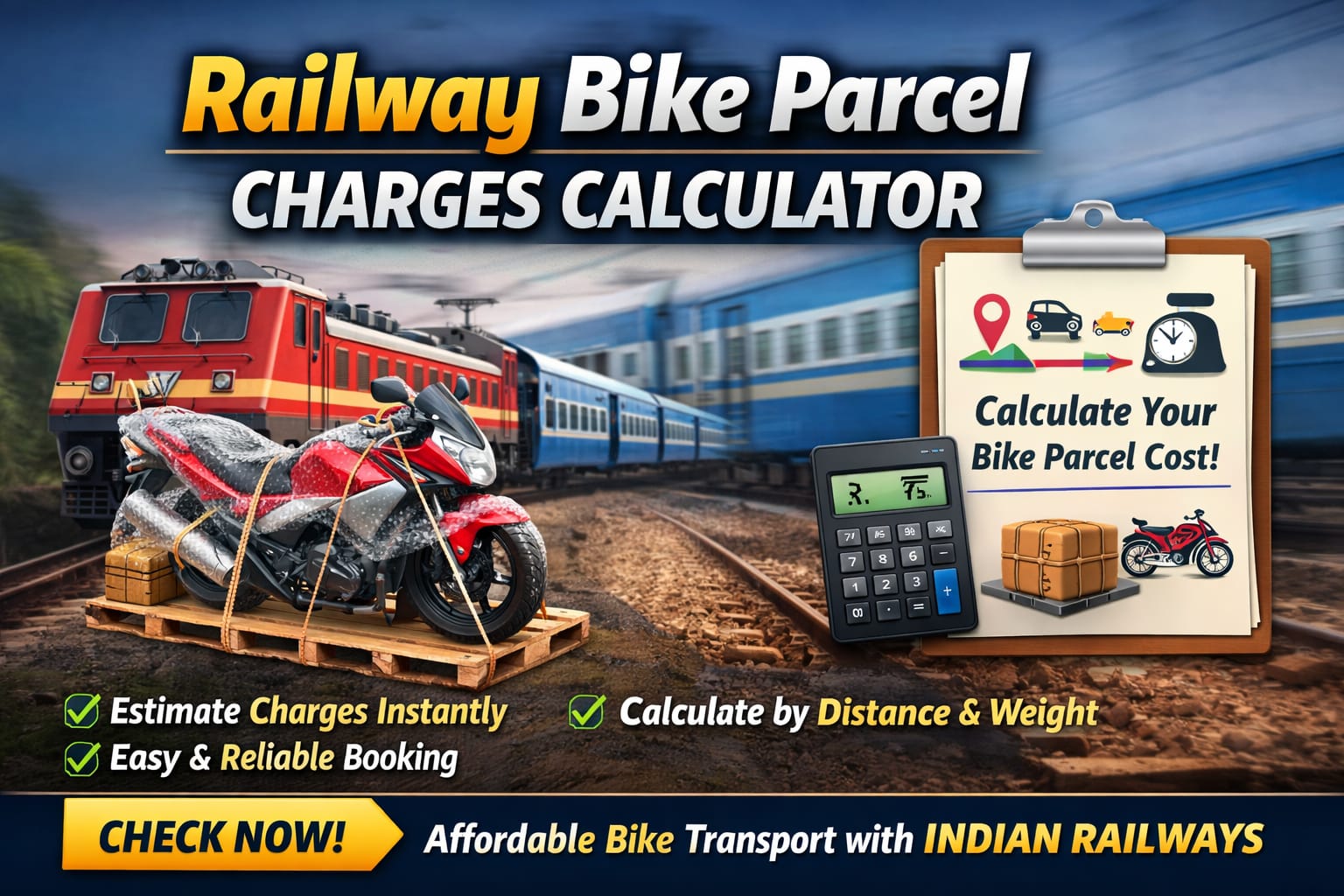
A railway bike parcel charges calculator helps you estimate the possible cost of transporting your two-wheeler by train. Although an online calculator can provide an approximate budget, the final railway charges depend on the applicable railway tariff, the motorcycle's weight, the distance, and other booking details.
In this guide, you will learn how to estimate bike parcel charges, calculate the expected transportation cost, and book your bike parcel through Indian Railways.
What Is a Railway Bike Parcel Charges Calculator?
A railway bike parcel charges calculator is a tool or calculation method used to estimate the cost of transporting a motorcycle or scooter through Indian Railways. It helps bike owners plan their transportation budget before visiting a railway parcel office.
The estimated charges may depend on several factors, including:
Distance: The railway route between the source and destination stations.
Bike weight: The weight considered under the applicable railway tariff.
Engine capacity: The bike's engine capacity may be relevant to certain estimates, but railway charges are not determined by engine capacity alone.
Parcel or luggage booking: The applicable tariff and booking method can differ.
Packing charges: The cost of preparing the bike for safe transportation.
Additional expenses: Loading, handling, or other applicable charges, where charged separately.
Using a calculator before booking can help you understand the potential cost and prepare a suitable transportation budget.
How to Calculate Railway Bike Parcel Charges
You can estimate your bike transportation expenses by identifying the source station, destination station, approximate distance, and motorcycle details.
Follow these steps to calculate the expected charges.
Step 1: Select Your Source Railway Station
Choose the railway station from which you want to send your bike. The station should offer parcel booking facilities for your intended destination.
For example, if you want to transport your motorcycle from Delhi to Mumbai, select the appropriate originating station in Delhi.
Step 2: Enter the Destination Station
Select the railway station closest to your destination. The distance between the originating and destination stations can affect the applicable parcel tariff.
Remember that railway distance may differ from the road distance displayed by a navigation application.
Step 3: Check Your Bike Details
Keep your motorcycle's registration details, approximate weight, and engine capacity available. These details can help with booking and obtaining a suitable estimate.
Step 4: Identify the Booking Method
Indian Railways generally provides two relevant options:
Bike parcel: The motorcycle is booked as a parcel for transportation to the destination station.
Bike luggage: The motorcycle may be booked as luggage under the applicable conditions, generally when the owner is travelling on the same train.
Availability and requirements depend on railway rules, the route, and the train concerned.
Step 5: Confirm the Final Charges
Contact the originating railway parcel office or use the official railway booking facility, where available, to verify the applicable tariff and any additional charges.
A calculator should be treated as an estimate rather than a confirmed quotation.
Railway Bike Parcel Charges by Distance
The cost of transporting a bike by train generally increases with the distance travelled. However, there is no single fixed price for every motorcycle and route.
The following table illustrates how to plan your budget by distance. These are distance categories, not official railway rates.
Approximate distance
What to check
Up to 200 km
Minimum applicable parcel charge and handling
200–500 km
Route-specific railway tariff
500–800 km
Applicable distance slab and bike weight
800–1,200 km
Long-distance parcel charges
More than 1,200 km
Exact route distance and applicable tariff
Important: These distance categories do not represent official price slabs. For accurate charges, check the current Indian Railways tariff for your route. Avoid relying on a generic price chart without verifying its source and date.
What Factors Affect Bike Parcel Charges by Train?
Several factors can affect the total cost of transporting a two-wheeler by railway.
1. Distance Between Stations
The distance travelled is an important factor in railway parcel pricing. A motorcycle sent over a longer route will generally cost more to transport than one sent over a shorter route.
2. Weight of the Motorcycle
The railway's applicable charging rules determine how weight is considered when calculating the parcel fee. Do not assume that the bike's engine capacity alone determines its transportation price.
3. Parcel Versus Luggage Booking
Parcel and luggage bookings follow different conditions. If you are travelling on the same train, ask the railway staff whether luggage booking is available and suitable for your journey.
4. Packing Requirements
Motorcycles usually need suitable packing before parcel transportation. Packing costs can vary depending on the materials, labour, and service provider.
Before handing over your bike, confirm whether packing is included in the quoted amount or must be paid separately.
5. Additional Railway Charges
Depending on the booking, additional applicable charges may affect the final amount. Ask for a breakdown of the railway charges and any separately payable expenses.
Documents Required for Bike Parcel Booking
Before booking your motorcycle, prepare the necessary documents to avoid delays.
Commonly required documents include:
Original vehicle Registration Certificate (RC) or the accepted vehicle registration document.
Valid government-issued photo identification.
Booking form and parcel declaration, as required.
Destination and sender details.
Any additional documents requested by the originating railway parcel office.
Requirements may vary by station and booking method. Confirm the current document requirements before visiting the parcel counter.
How to Book a Bike Parcel Through Indian Railways
Once you have estimated the charges, follow these steps to book your motorcycle.
1. Visit the parcel office
Visit a railway station that accepts two-wheeler parcel bookings and confirm service availability for your destination.
2. Prepare your motorcycle
Follow the station's packing instructions. Remove loose accessories and keep the required vehicle documents ready.
3. Complete booking and weighing
Submit the required information and let railway staff determine the applicable charges under the current tariff.
4. Pay and collect the receipt
Pay the applicable amount and retain your parcel receipt or booking reference for tracking and collection.
5. Collect your bike
Follow the railway's arrival and collection instructions. Carry your receipt and identification when collecting the motorcycle.
Bike Parcel by Train vs. Private Bike Transport Service
Both railway transportation and private bike transport services can be useful, depending on your budget, schedule, and destination.
Feature
Railway bike parcel
Private bike transport
Pricing
Based on applicable railway tariff
Depends on route and service provider
Booking
Through eligible railway parcel facilities
Through a transport company
Door-to-door delivery
Usually not included
May be available
Packing
Follow railway requirements
Depends on the provider
Delivery timeline
Depends on train and parcel handling
Depends on route and provider
Convenience
Often requires station visits
Pickup and delivery options may be available
If your priority is comparing railway charges, use the railway tariff applicable to your route. If you prefer pickup from your home and delivery to your destination, compare private transport quotations as well.
Tips to Reduce Bike Transportation Expenses
You can manage your bike transportation budget with a few practical steps.
Compare the total cost of parcel booking with private transport quotations.
Check the correct originating and destination stations before travelling.
Ask whether packing charges are separate from railway charges.
Keep all required documents ready to avoid repeat visits.
Confirm the parcel booking availability and collection procedure in advance.
Retain the receipt and inspect the motorcycle for visible damage when collecting it.
Do not choose a service based only on its advertised starting price. Check the complete cost, delivery arrangements, and applicable terms before making a booking.
Common Mistakes to Avoid When Using a Railway Bike Parcel Charges Calculator
A calculator is useful only when you understand its limitations. Avoid these common mistakes:
Using road distance instead of railway distance: The distance used for railway charges may be different.
Assuming engine capacity determines the entire fee: The applicable railway tariff and other booking details also matter.
Ignoring packing expenses: Packing may be a separate cost.
Confusing parcel and luggage booking: The two options have different conditions.
Relying on outdated price lists: Tariffs and booking procedures may change.
Booking without checking availability: Not every station or train necessarily accepts the intended booking.
Verifying these details before booking helps you avoid unexpected expenses and delays.
Frequently Asked Questions (FAQs)
1. How can I calculate railway bike parcel charges?
Identify your source and destination stations, check the applicable railway distance and tariff, and confirm any additional charges with the parcel office. An online calculator may provide an estimate, but the final amount must be verified.
2. Is there an official railway bike parcel charges calculator?
An independently published calculator is not necessarily an official Indian Railways tool. Check official railway resources or contact the parcel office to confirm the current applicable rate for your route.
3. Are bike parcel charges calculated according to engine capacity?
Engine capacity alone does not determine the full railway parcel charge. The applicable tariff and booking details must be considered.
4. Can I send my bike by train without travelling?
Yes, bike parcel booking may allow you to transport a motorcycle without travelling on the same train, subject to service availability and railway requirements. Bike luggage booking has different conditions.
5. Is packing included in railway bike parcel charges?
Not necessarily. Packing may be charged separately, depending on the arrangement. Confirm the packing cost and railway charges before booking.
6. Which documents are required to transport a bike by train?
You may need the vehicle registration document, photo identification, and the required booking forms. Confirm the exact requirements with the originating railway parcel office.
7. Is railway bike parcel service cheaper than private bike transport?
Railway parcel service can be economical on some routes, but the total cost depends on the applicable tariff, packing, station access, and handling. Compare the complete cost of both options before deciding.
8. How long does it take to transport a bike by train?
The time depends on the route, train availability, parcel handling, and collection arrangements. Confirm the expected dispatch and arrival details with railway staff.
Conclusion
A railway bike parcel charges calculator can help you plan the cost of transporting your motorcycle by train in India. However, an accurate estimate requires the correct route, applicable railway tariff, booking method, and any additional expenses such as packing.
Before booking, verify the current charges with the originating railway parcel office, prepare the required documents, and understand the collection procedure. Comparing railway parcel booking with private bike transport services can also help you choose an option that suits your budget and convenience.