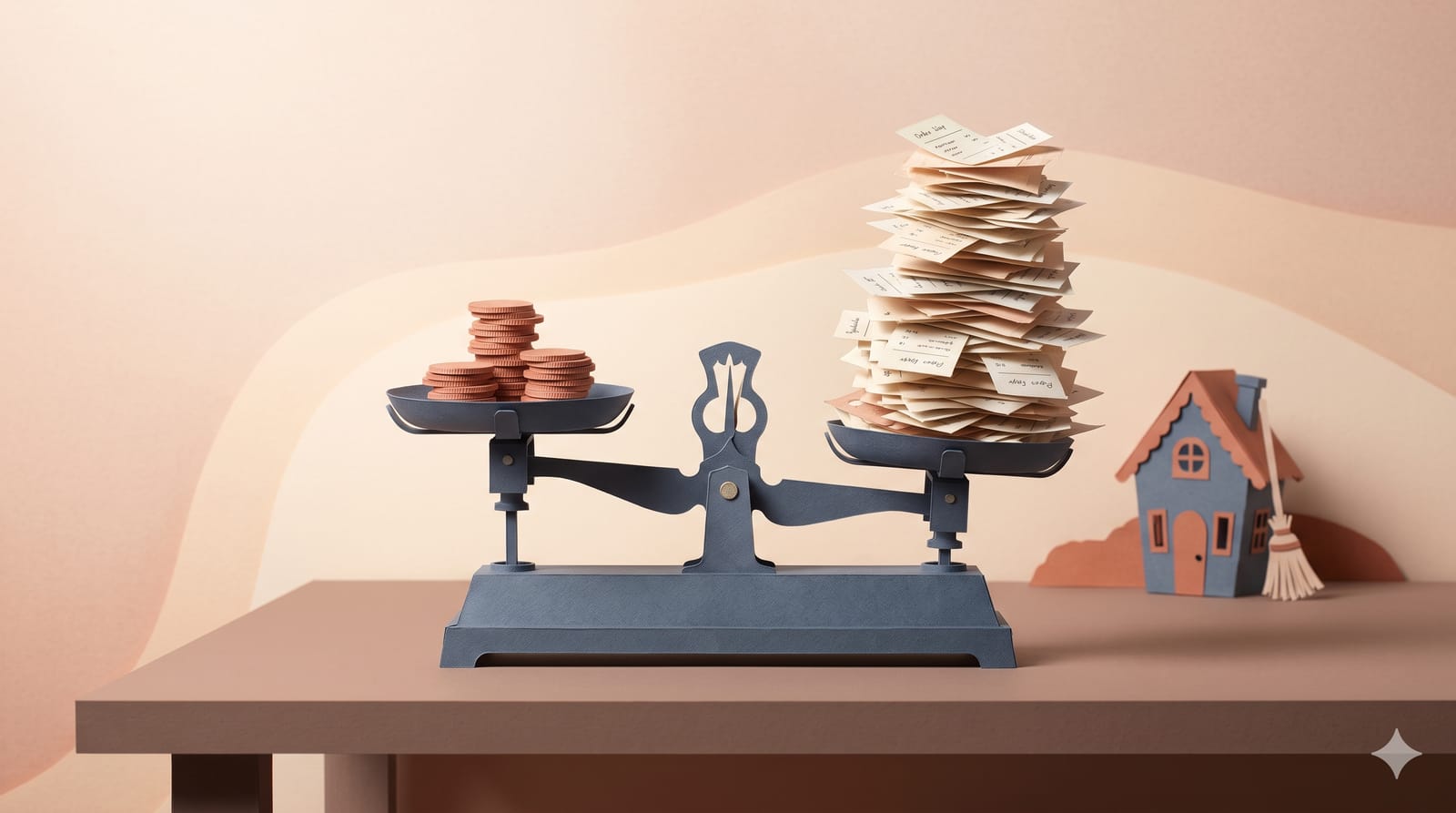

Ather Energy reported its first quarterly profit last week: ₹1.26 crore for July to September 2026, against a loss of ₹154 crore a year earlier. The stock jumped and the headlines said "turns profitable". Both are fair. But if you are a founder, the more useful exercise is to open the numbers and ask which line turned positive, and why. Ather's quarter is a clean, public example of how "profitable" can mean three different things, and how investors read each one.
The headline numbers
Here is what the company reported for Q2 FY27, the quarter ended 30 September 2026, as summarised by Upstox and other outlets:
Revenue from operations: ₹1,464 crore, up 63% from ₹899 crore a year earlier.
Net profit: ₹1.26 crore, after a ₹51 crore loss in the previous quarter.
Board approval for about ₹122 crore of capacity expansion, plus a ₹1,300 crore qualified institutions placement.
As a story, that is a strong quarter. Revenue grew by more than half in a year and the loss disappeared. Now look one level down.
Where the profit came from
StartupTalky's breakdown adds the lines that the headline skips. Other income was ₹62.7 crore. Total income was ₹1,527 crore against total expenses of ₹1,526 crore. In other words, operating revenue fell about ₹61.5 crore short of covering expenses, and other income closed the gap with roughly a crore to spare.
Do the subtraction yourself: take out ₹62.7 crore of other income and a ₹1.26 crore profit becomes a loss of about ₹61 crore. That is still a huge improvement on ₹154 crore a year ago. It is not yet a business that covers its costs from selling scooters.
The Morning Voice put the margin in plain terms: a net margin of about 0.09%, or roughly nine paise of profit per ₹100 of revenue. A slightly worse month on battery costs or discounts and the sign flips back.
Other income is real money, with a different meaning
Other income usually means interest and gains on the cash a company holds, plus smaller one-off items. It is real money, and a company that raised a lot of capital earns a lot of it. Investors still treat it separately, because it tells you about the balance sheet, not about whether each unit sold makes money. If the cash pile shrinks, so does that income.
Two EBITDA numbers for the same quarter
Here is the part that should make every founder check their own investor deck. Two outlets reported two different EBITDA figures for the same quarter:
Upstox: EBITDA of ₹11.42 crore, a margin of 0.80%.
Free Press Journal: EBITDA of ₹74.2 crore, a 4.9% margin, and the company's "second consecutive EBITDA-positive quarter".
Neither is necessarily wrong. The gap between them is about ₹62.8 crore, almost exactly the other income figure. The likely reading is that one number includes other income and the other does not. That is my inference from the arithmetic, not something either report states, so check the company's own filing before quoting either. Either way, the lesson stands: EBITDA has no single legal definition, and the same quarter can be presented as a 0.8% margin or a 4.9% margin depending on one choice.
The number that actually matters: costs grew slower than revenue
Strip away the profit debate and the most encouraging line is this one. Revenue grew 63% year on year. Total expenses grew 39.4%. When revenue outruns costs by that much, each extra sale contributes more to fixed costs like the factory, R&D and the service network. That is operating leverage, and it is what eventually makes the "excluding other income" line turn positive too.
It is also why the market reacted the way it did. FPJ reports the shares were up 121% in 2026 by late October, and brokerages raised targets. Investors were not paying for nine paise of profit per ₹100. They were paying for the trend in the gap between revenue and costs. If you have read our breakdown of what Urban Company's per-order loss teaches about unit economics, it is the same question asked at a different scale: is each unit getting closer to paying for itself?
Four habits to take from this
1. Say which "profitable" you mean. Contribution margin positive, EBITDA positive excluding other income, EBITDA positive including it, and net profit positive are four different milestones. Name the one you hit. Investors will work it out anyway, and being precise first builds trust.
2. Show EBITDA both ways if you have meaningful other income. If you raised a big round and park it in fixed deposits, your interest income can flatter EBITDA for a year or two. Put both versions on the slide. It costs you nothing and removes the awkward question.
3. Track revenue growth against cost growth every quarter. A simple two-line chart beats a profit headline. If the lines are diverging in the right direction, you have a story even before the bottom line turns.
4. Read other companies' filings, not their press coverage. Listed startups now publish a lot of detail. Our guide on how to read a startup IPO prospectus walks through where the useful numbers hide; quarterly results follow the same logic.
The takeaway
Ather's quarter is good news, and the reporting on it is accurate. The useful part for founders is the gap between the headline and the operating line: a ₹1.26 crore profit, a roughly ₹61 crore operating shortfall covered by other income, and costs growing much slower than revenue. When you announce your own milestone, write the sentence the way a careful analyst would read it. Figures here are as reported between 26 and 27 October 2026; check Ather's exchange filing for the final audited numbers.